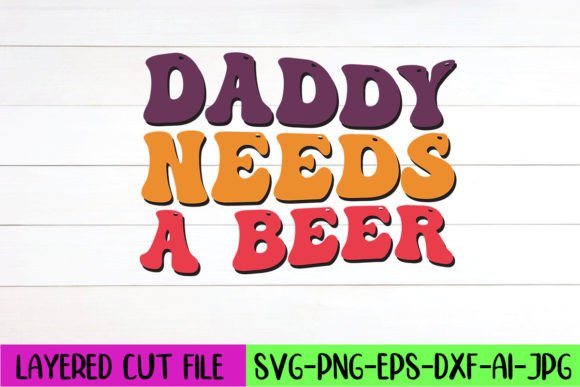
Daddy Needs a Beer Retro SVG Design
As a designer who spends more time than I care to admit staring at stitch lines and evaluating fabric tension, I approach every new embroidery file with a healthy dose of skepticism. The market is flooded with clipart that looks great on a screen but falls apart under the needle. That is why I decided to put Daddy Needs a Beer Retro SVG Design through its paces. This isn't just about whether it cuts cleanly; it is about whether it translates into a professional, sellable handmade product that resonates with customers.
First Impressions: Mood and Visual Personality
The moment you load this design into your software, the retro aesthetic jumps out. It captures that specific nostalgic vibe that has been dominating the craft business landscape for years. It feels casual, approachable, and slightly humorous without being overly loud. For an embroidery project, mood is everything. If the design feels cluttered or aggressive, it limits where you can place it. Here, the layout feels balanced, suggesting it was built with actual stitching in mind rather than just vector paths.
The theme is clear: a celebration of fatherhood mixed with a love for cold beverages. This makes it an instant hit for personalized gifts. Whether you are targeting a dad who loves grilling, a new parent celebrating his first Father’s Day, or someone looking for a funny groomsmen gift, the visual hook is strong. It creates an immediate emotional connection before the customer even sees the finished stitch quality.
Real-World Application: Where This Design Shines
I recently used a similar style design to prepare a custom embroidered tote bag for a local craft fair, and I see Daddy Needs a Beer Retro SVG Design fitting perfectly into that same workflow. It works exceptionally well on custom apparel like sweatshirts and t-shirts. Imagine a heather grey crewneck with this centered on the chest. The retro font style pairs beautifully with softer, worn-in fabrics.
Beyond apparel, this design has serious potential as an embroidered patch. If you plan to attach patches to denim jackets, backpacks, or baseball caps, the self-contained nature of most retro designs allows them to stand alone as a statement piece. I also envision this doing well on kitchen towels or aprons. There is something charming about seeing a humorous, masculine-themed design on a soft cotton tea towel hanging in a modern farmhouse kitchen.
For Etsy sellers and small shop owners, versatility is key. This design bridges the gap between novelty and genuine affection. It is not just "funny"; it is a tribute to a dad who relaxes with a beer. That nuance helps justify a higher price point for a personalized gift. Customers are willing to pay more when they feel the item is thoughtful, not just generic.
Stitch Quality and Technical Performance
When evaluating any machine embroidery design, I always look at how the different stitch types interact. While I do not have the exact stitch count for this specific file, the visual complexity suggests a mix of fill stitches for the main body and satin or running stitches for outlines and details. This combination is crucial for durability.
If the design relies too heavily on dense fills, it can become stiff and uncomfortable against the skin, especially on baby clothes or delicate fabrics. However, the retro style often utilizes negative space effectively, which reduces thread usage and improves drape. When testing, I would advise checking the stitch density carefully. If the threads are packed too tightly, you risk puckering, particularly on lightweight tees or stretchy jersey knits.
The inclusion of various file formats, such as SVG, DXF, and EPS, means you have flexibility. If you are using this for cutting vinyl instead of just embroidery, the clean lines of the SVG are vital. But for true embroidery, ensure the digitizing handles the curves smoothly. Jagged edges in a digital file translate to jagged stitches, which immediately signals low quality to a discerning buyer.
Where to Use Caution
No design is perfect for every surface. There are specific scenarios where Daddy Needs a Beer Retro SVG Design might struggle if you are not careful.
- Small Hoop Sizes: If you are working with very small hoops, intricate details might get lost or merge together. Always check the bounding box dimensions before hooping.
- Textured Fabrics: While this design looks good on smooth cotton, textured fabrics like heavy waffle knit or boucle can hide the finer details of the lettering. The contrast between the thread and the fabric texture becomes harder to read.
- Stretchy Fabrics: Embroidery on highly stretchy materials requires proper stabilizers. Without them, the tension from the satin stitch or fill stitch can distort the garment, making the design look warped after washing.
- Curved Surfaces: Applying this to a curved surface like a cap brim or a rounded shoulder requires precise placement. If the design is wide, it may not sit flat on a narrow curve.
Additionally, be mindful of thread colors. A retro design often uses bold, contrasting colors. If you choose a thread color that is too close to the fabric shade, the design will lose its impact. Test your combinations in black and white mockups first to ensure there is enough value contrast.
Impact on Brand and Customer Trust
In the world of craft business and small shop products, presentation is half the battle. Using a well-executed design like this elevates your brand perception. It shows you understand current trends and know how to create items that people actually want to wear or use.
When a customer receives a finished product with clean stitches, no loose threads, and a design that clearly communicates its message, their trust in your shop increases. They are more likely to leave a positive review and return for future purchases. Conversely, a poorly executed design can lead to returns and damaged reputation. This is why testing on scrap fabric is non-negotiable.
Practical Designer Notes for Success
- Test First: Never run a production order without stitching a test version. Check for registration issues and thread breaks.
- Check Stabilizer: Use the right stabilizer for your fabric type. Cut-away for knits, tear-away for wovens.
- Review Licensing: Before selling commercial embroidery items, confirm the license terms. Some designs allow personal use only, while others permit commercial sales of physical goods.
- Mockup Realistically: Create printable mockups that show the design on the actual garment you are selling. This helps customers visualize the final result.
- Inspect Details: Zoom in on the digital file. Are the corners sharp? Is the spacing consistent? Small errors are magnified in embroidery.
Ultimately, Daddy Needs a Beer Retro SVG Design offers a solid foundation for a variety of profitable projects. It taps into a popular theme, fits well within current design trends, and provides enough flexibility for different applications. By paying attention to the technical details—hoop size, fabric choice, and stitch quality—you can transform this digital asset into a high-quality handmade product that stands out in a crowded marketplace.
Whether you are a seasoned pro or just starting your journey as an Etsy seller, this design is worth considering for your next batch of creations. Just remember, the best designs are those that are executed with care and respect for the medium. Happy stitching!