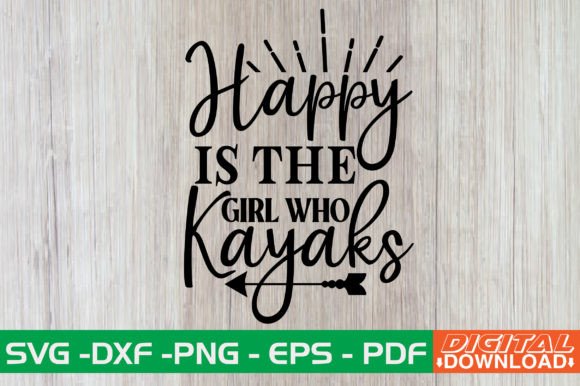
Happy is the Girl Who Kayaks Retro SVG
I have spent years reviewing digital assets for my own embroidery business, and I know that a pretty preview image often hides stitching nightmares. When Happy is the Girl Who Kayaks Retro SVG landed on my desk, I didn't just look at the vector lines; I looked at how those lines would translate into thread on a real piece of fabric. This isn't just another graphic for your computer screen. It is a potential bestseller for your Etsy shop or a cherished gift for a friend, but only if you understand its limitations and strengths before hitting the "stitch" button.
The First Impression: Mood and Visual Personality
The moment you open the file, the retro aesthetic jumps out. The typography feels nostalgic, evoking that warm, vintage summer vibe that never really goes out of style. For an embroidery designer, this mood is gold. It suggests a project that feels personal, relaxed, and slightly adventurous. The layout is clean enough to work well on small items like a baby onesie or a kitchen towel, yet bold enough to make a statement on a tote bag or a sweatshirt.
As someone who values brand consistency, I appreciate that the design has a distinct personality. It isn't generic clip art; it feels curated. When I imagine this stitched onto a canvas tote bag in navy blue thread with a white background, the contrast creates an immediate visual hook. It screams "outdoor enthusiast," making it perfect for targeted marketing to specific audiences. However, the retro style relies heavily on clear lines. If the stitch density is too high, those crisp edges might blur, losing the very charm that makes the design attractive.
Real-World Application: From Screen to Stitch
Let's talk about a specific scenario. I recently needed a custom embroidered patch for a local craft fair booth to celebrate a summer kayaking trip. I considered using Happy is the Girl Who Kayaks Retro SVG for this purpose. The phrase itself is catchy, and the retro font style fits perfectly with a vintage-inspired booth aesthetic. But could it survive the rigors of being worn and washed?
In this case, I would recommend placing the design on a sturdy cotton twill for the patch. The design works beautifully as a machine embroidery design because the lettering likely uses a combination of satin stitches for the outlines and fill stitches for the body. If executed correctly, the result is a tactile, raised texture that adds value to the finished product. Customers love feeling the quality of the embroidery, and a well-stitched retro slogan can turn a simple patch into a premium accessory.
Beyond patches, this file shines on soft goods. Imagine a cozy sweatshirt made from a heavy cotton blend. The design would sit comfortably on the chest or back without distorting the fabric. Similarly, for a nursery item, the playful tone of the phrase makes it an excellent choice for a baby blanket or a personalized bib. The key here is matching the design scale to the garment. A massive version of this SVG on a tiny baby hat would look cluttered, while a smaller, refined version on a large apron might get lost. Finding that sweet spot is crucial for professional results.
Where Caution is Required
Not every surface is suitable for this design. While Happy is the Girl Who Kayaks Retro SVG is versatile, there are areas where you must exercise extreme care. Small hoop sizes are a common pitfall. If you attempt to stitch this on a 4x4 inch hoop, the text might become cramped, causing the letters to merge or the spacing to look uneven. Always check your intended hoop size against the dimensions of the SVG before importing it into your digitizing software.
Textured fabrics also pose a challenge. If you try to embroider this directly onto a rough burlap or a highly textured linen, the needle may struggle to penetrate cleanly, leading to skipped stitches or thread breaks. Thin or stretchy fabrics require a stabilizer that matches the weight of the material. Without proper support, the tension of the embroidery can pucker the fabric, ruining the retro look with unwanted wrinkles.
Dense stitch areas should be monitored closely. If the original digitization includes too many stitches per inch, the fabric will become stiff and board-like. This is particularly problematic for apparel items like t-shirts or baby clothes, where comfort is paramount. Additionally, dark fabrics demand careful thread selection. A light-colored retro design on black fabric requires a high-quality underlay and possibly a double-pass technique to ensure opacity, which increases the risk of puckering if not managed correctly.
Visual Appeal and Product Value
The way this design stitches directly impacts customer trust. A sloppy execution of Happy is the Girl Who Kayaks Retro SVG can make a handmade product look amateurish, regardless of how good the concept was. Conversely, a clean, precise stitch job elevates the perceived value. When buyers see consistent tension, sharp corners, and vibrant thread colors, they assume the entire product is high quality. This design has the potential to be a signature piece for a boutique or a standout item in an Etsy listing.
For commercial embroidery projects, the clarity of the lettering is vital. If the text becomes illegible due to poor stitching, the message is lost, and the product fails its primary function. The retro theme adds a layer of emotional connection, but only if the technical execution supports it. Think about how the design interacts with the fabric texture. On a smooth cotton, the threads lie flat and crisp. On a flannel, they might sink in slightly, creating a softer, more muted look that still retains the design's character.
Practical Designer Notes for Success
Before you commit to a full production run, follow these essential steps. First, test the design on scrap fabric. This allows you to see how the thread colors interact with the material and whether the stitch density causes any issues. Check the thread color contrast carefully; sometimes a color that looks great on a monitor appears muddy when stitched.
Review the stitch density settings in your software. If the design feels too dense, consider reducing the fill percentage or adjusting the stitch length to prevent bulkiness. Confirm the hoop size matches your intended project dimensions. Inspect small details, especially the curves in the letters and the ends of the strokes, to ensure they don't break down during stitching.
It is also wise to test the design in black and white mockups. This helps visualize the contrast without the distraction of color. Compare how the design looks on both light and dark fabric backgrounds to ensure versatility. Use the proper stabilizer for your fabric type; a cut-away stabilizer is often best for stability on stretchy materials, while tear-away works well for woven fabrics.
Finally, verify the licensing terms. The download includes one .zip file with Word By Layer SVG files, which is excellent for customization, but you must confirm whether you are allowed to sell finished products created with this design. Some licenses restrict commercial use, while others allow it. Checking these details upfront protects your business from legal complications.
When used thoughtfully, Happy is the Girl Who Kayaks Retro SVG transforms from a simple digital file into a tangible piece of art. Whether you are creating a personalized gift, a custom apparel line, or a unique craft business item, this design offers a strong foundation. It captures a spirit of adventure and nostalgia that resonates with many. With the right preparation and attention to detail, you can turn this digital asset into a profitable and beautiful finished product that customers will cherish.